Daily hydration supports energy levels, focus, and overall well-being, yet many people struggle with plain water tasting boring or bottles that leak, crack, or feel uncomfortable during commutes, workouts, or desk hours, leading to inconsistent intake despite good intentions. Selecting the right water bottle transforms routine sipping into a seamless habit, matching personal needs like capacity, material safety, lid security, and insulation without unnecessary features that add bulk or cost to everyday carry. This Alex Top Finds guide equips beginners with clear criteria for evaluating options suited to offices, gyms, schools, travel, or home use, covering sizes from 500 ml commuters to 1-liter hikers while prioritizing leak-proof designs, easy cleaning, and durability for family sharing or solo routines. By focusing on practical aspects like grip comfort, spout types, and temperature retention, readers build confidence in picks that encourage 2-3 liters daily without spills in bags, condensation on desks, or flavor transfer between beverages, ensuring long-term value in compact, budget-friendly choices that fit modern lifestyles seamlessly.
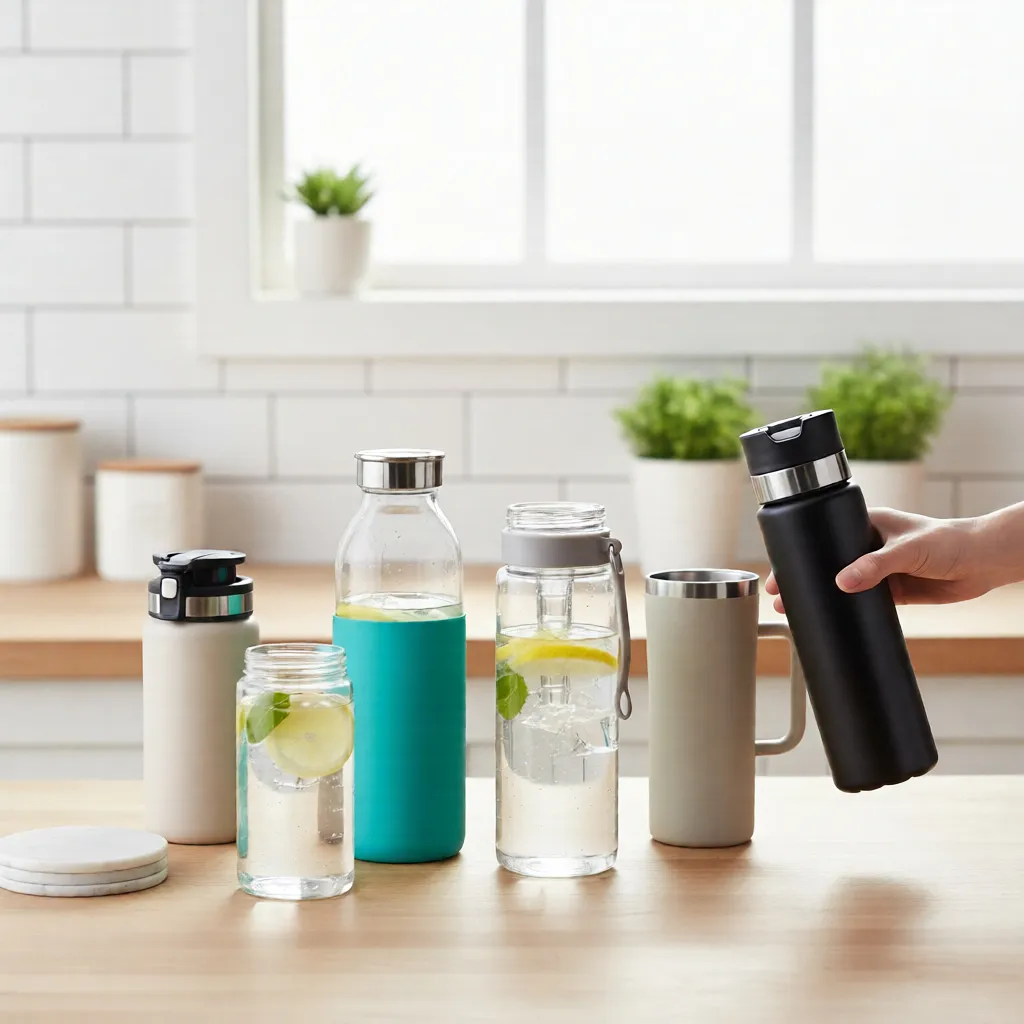
Capacity Matching Your Routine
500-750 ml bottles suit office desks or short outings, refilling easily at fountains without excess weight during walks. 1-liter options handle full-day hydration for gym sessions or travel, balancing portability with capacity needs. Measure daily intake goals first to avoid undersized picks that require constant refills.
Material Safety and Weight
Stainless steel resists dents, retains temperatures 6-12 hours, and avoids chemical leaching, ideal for hot teas or iced drinks year-round. BPA-free plastic offers lightweight affordability for kids’ lunches, while glass provides pure taste but needs protective sleeves against drops. Prioritize food-grade certifications for family use.
Lid and Spout Versatility
Screw-top lids seal reliably for bags, with flip straws enabling hands-free sips during drives or runs. Wide-mouth designs simplify ice addition and cleaning, while one-touch buttons suit active lifestyles without loosening over time. Test seal pressure by shaking filled prototypes in stores.
Insulation for Temperature Control
Double-wall vacuum insulation keeps cold drinks chilled 24 hours or hot ones warm 6-8 hours, preventing sweats on tables or lukewarm middays. Non-insulated basic models suffice for room-temperature water, saving cost and weight for minimalists.
Grip and Ergonomic Design
Textured silicone sleeves or contoured shapes prevent slips from wet hands, with finger loops aiding carry during errands. Narrow bases fit cup holders in cars or bikes, ensuring stability on uneven surfaces.
Cleaning and Maintenance Ease
Dishwasher-safe bodies with removable parts reduce scrubbing time, while wide openings fit brushes for deep crevices. Straw cleaners and drying racks prevent mold in lid crevices, essential for multi-day use without daily deep washes.
Durability for Daily Drops
Reinforced rims and flexible materials withstand backpack tumbles or playground falls, backed by drop-test ratings from manufacturers. Replace only after visible cracks, as quality builds last 2-5 years under normal handling.
Customization and Tracking Features
Time-marked bodies remind sip schedules, while colorful caps distinguish family bottles at events. Avoid electronic trackers initially, opting for simple engravings that personalize without battery hassles.
Budget Ranges and Long-Term Value
Entry-level 10-20 units deliver core functions reliably, while 30-50 mid-range adds insulation perks. Calculate per-use cost over years, favoring warranties covering defects for sustained savings.
Storage and Portability Tips
Collapsible silicone models shrink for bags when empty, while rigid ones nest in fridge doors. Sleeve carriers protect during transit, pairing with carabiners for backpack attachments.