Non-stick cookware has become a common part of modern kitchens because it makes everyday cooking easier, reduces the need for excess oil, and simplifies cleaning after meals. A thoughtful guide on choosing safe non-stick cookware helps readers avoid low-quality options, understand what to look for in materials, and make better decisions for daily home use instead of relying on aggressive marketing claims. This article for Alex Top Finds focuses on practical, easy-to-understand factors like coating type, base material, handles, size, and maintenance so that families can cook comfortably and confidently.
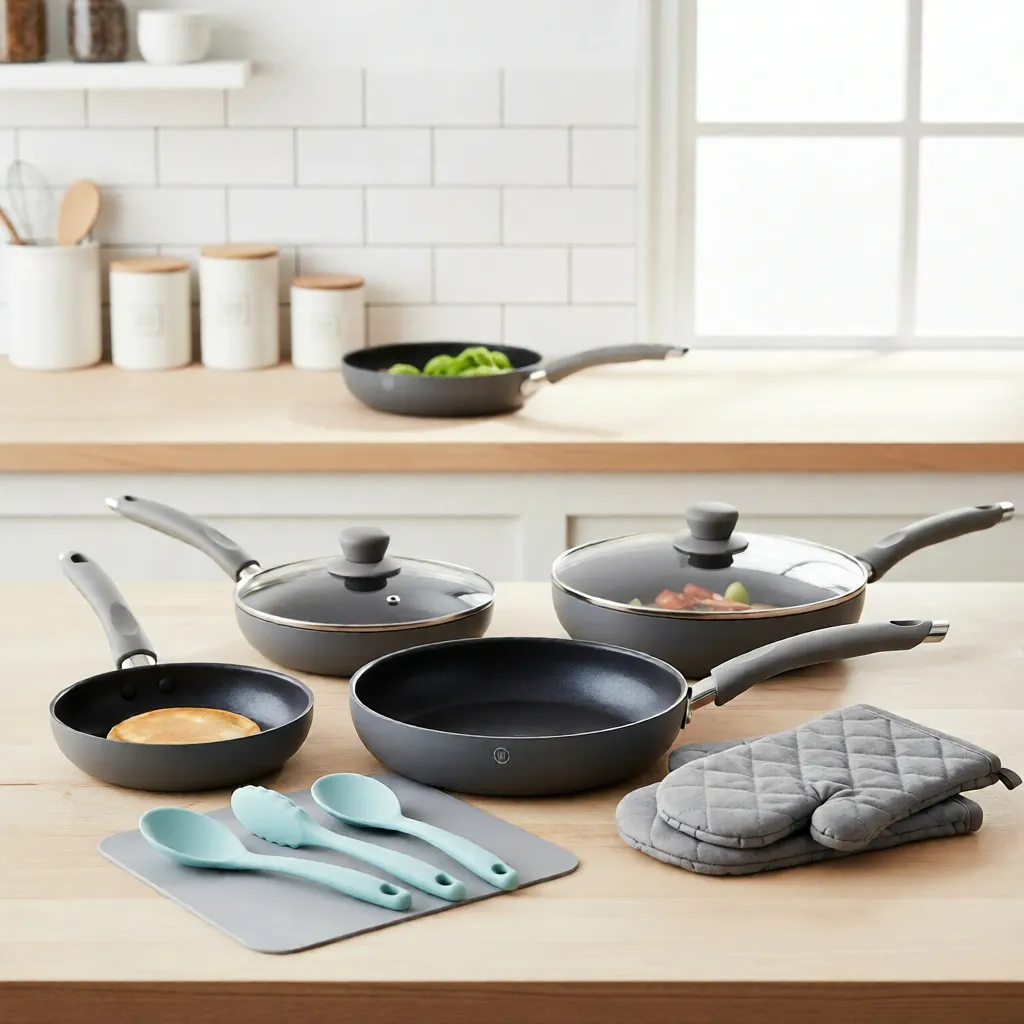
Understand What “Non-Stick” Really Means
Many people see the term “non-stick” on packaging and assume all products are the same, but different brands use different coating technologies. Some coatings are more durable, some are more scratch-resistant, and some are designed for specific heat ranges or cooking styles. Understanding that non-stick simply refers to a special layer that prevents food from sticking helps buyers look beyond advertising and check actual specifications and care instructions.
Check the Base Material of the Cookware
The base under the non-stick coating is often made of aluminum, stainless steel, or a combination of materials designed for better heat distribution. Aluminum-based pans are usually lighter and heat up quickly, which is convenient for daily cooking, but they may need a thicker base or extra layers for durability. Stainless steel bases can feel sturdier and may distribute heat more evenly, which helps when cooking dishes that require consistent temperature across the surface.
Look for Even Heat Distribution
Even heat distribution is important because it helps food cook properly without burning in one spot and remaining undercooked in another. Many non-stick pans promote features like “thick base,” “multi-layer construction,” or “impact-bonded base,” which are signs that the manufacturer has considered heat spread. When heat is uniform, dishes such as pancakes, omelettes, and stir-fries turn out better, and there is less need to keep adjusting the flame or moving food around constantly.
Pay Attention to Handle Quality and Safety
Handles are often ignored while buying cookware, but they play a big role in comfort and safety during daily use. A good handle should feel sturdy, stay cool enough to hold during normal stovetop cooking, and be attached securely with rivets or screws that do not loosen easily. Some pans come with silicone or plastic grips to provide better hold, while others use metal handles that may be suitable for both stovetop and oven use, depending on the product directions.
Choose Sizes That Match Your Cooking Habits
Instead of buying the largest pan available, it is better to choose sizes that suit the number of people in the household and the types of dishes cooked regularly. A medium pan is usually ideal for single-person meals or quick breakfasts, while a larger pan works well for families or dishes that need more surface area. Matching the pan size to the burner size also helps improve efficiency and prevents handles from overheating or sticking out too far from the stove.
Check Compatibility With Your Stove Type
Not all non-stick cookware works with every stove, so it is important to check compatibility with gas, induction, or electric cooktops. Pans designed for induction typically have a magnetic base or a clearly marked symbol on the packaging, while some lightweight pans may be meant only for gas or standard electric stoves. Verifying this before buying ensures that the cookware heats properly and lasts longer without warping or underperforming.
Consider Lids and Additional Features
A well-fitting lid helps retain heat and moisture, which makes cooking faster and more energy-efficient, especially for dishes that need simmering. Glass lids allow you to see the food without lifting the cover, while metal lids may feel more robust and lighter in weight. Extra features like steam vents, pouring lips, or measurement markings can make everyday use more convenient, but they should not compromise the basic sturdiness and fit of the lid.
Learn the Basic Care Rules for Non-Stick Cookware
Even the best non-stick pan will wear out quickly if used roughly, so understanding care instructions is essential for daily users. Most non-stick cookware performs better when used on low to medium heat instead of very high flames, which helps preserve the coating and prevents food from burning. Using wooden, silicone, or plastic utensils instead of sharp metal tools reduces the risk of scratches, and hand washing with a soft sponge extends the life of the pan.
Avoid Common Mistakes That Damage Non-Stick Pans
Certain everyday habits can shorten the lifespan of non-stick cookware without the user realizing it. Heating an empty pan for a long time, cutting food directly inside the pan, or stacking heavy items on top of the coating can all lead to early wear. Placing a very hot pan under cold water immediately after cooking may also cause warping, so allowing it to cool slightly before washing is a safer practice for long-term use.
Know When It Is Time to Replace Non-Stick Cookware
All cookware, including non-stick pans, has a limited life and eventually shows signs that it needs replacement. If the surface becomes heavily scratched, the coating peels, or food starts sticking even with proper care, it may be a sign that the pan has reached the end of its useful period. Replacing worn-out pans at the right time helps maintain a comfortable cooking experience and keeps the kitchen setup efficient and reliable for everyday meals.