Tablets streamline study sessions and reading habits by consolidating textbooks, notes, PDFs, e-books, and web research into lightweight screens that fit backpacks or bedside tables, yet beginners often pick models overwhelmed by bloatware, short batteries, or dim displays that strain eyes during late-night cram sessions or daily commutes for classes. Affordable options under moderate budgets balance portability, 8-10 hour endurance, stylus support, and app ecosystems for students, professionals reviewing reports, or parents reading bedtime stories without compromising clarity or storage for semester-long libraries. This Alex Top Finds guide navigates key specs like screen sizes, RAM capacities, OS choices, and accessory compatibility across Android, iPadOS, ensuring reliable devices for annotating slides, multitasking browsers, or Kindle integration that last 3-4 years through updates and drops.
Screen Size and Resolution for Comfortable Viewing
8.5-10.5 inch displays suit one-handed holds during lectures, 1920×1200+ resolutions rendering textbooks sharply without pixelation on small fonts—IPS panels maintain colors consistently from 30-60° angles, ideal for group study shares. Matte anti-glare coatings reduce reflections in lit dorms, 60-90Hz refresh rates smoothing page turns 2x faster than 60Hz rivals. Eye comfort certifications like TÜV Rheinland limit blue light 40%, auto-brightness adapting to libraries or outdoors seamlessly.
Processor Power for Smooth Multitasking
Snapdragon 680 or Helio G99 octa-cores handle split-screen note-taking alongside Zoom tabs fluidly, 4-6GB RAM juggling 10+ apps without reloads during essay research. Mali GPUs accelerate PDF renders 30% quicker, thermal throttling minimized via graphite sheets sustaining peaks 2x longer than plastic backs. Benchmark scores above 300k AnTuTu confirm fluidity for 2 years post-launch reliably.
Battery Endurance and Charging Speeds
6000-8000mAh cells deliver 9-12 hours mixed study/reading at 50% brightness, 18W fast charging hitting 70% in 45 minutes between classes. Adaptive modes learn usage prioritizing battery over performance during finals, standby draining <5% daily with push notifications off. USB-C PD universality recharges from laptops/power banks interchangeably.
Storage Options and Expandability
64-128GB UFS 2.1 bases hold 50+ textbooks and 500GB microSD expansions doubling via Class 10 cards for video lectures—dedicated slots avoid SIM/storage tradeoffs, app cloning duplicating study tools across profiles. Cloud syncs like OneDrive integrate seamlessly, offline caching 100+ PDFs durably.
Operating Systems and App Ecosystems
Android 13+ with 3-year updates supports Google Classroom, OneNote, and Kindle natively, split-view multitasking two apps side-by-side full-screen. iPadOS excels in Apple Pencil precision for handwritten notes, Files app organizing semesters hierarchically. ChromeOS tablets bridge laptops affordably, Linux apps running natively for coding classes.
Stylus and Keyboard Compatibility
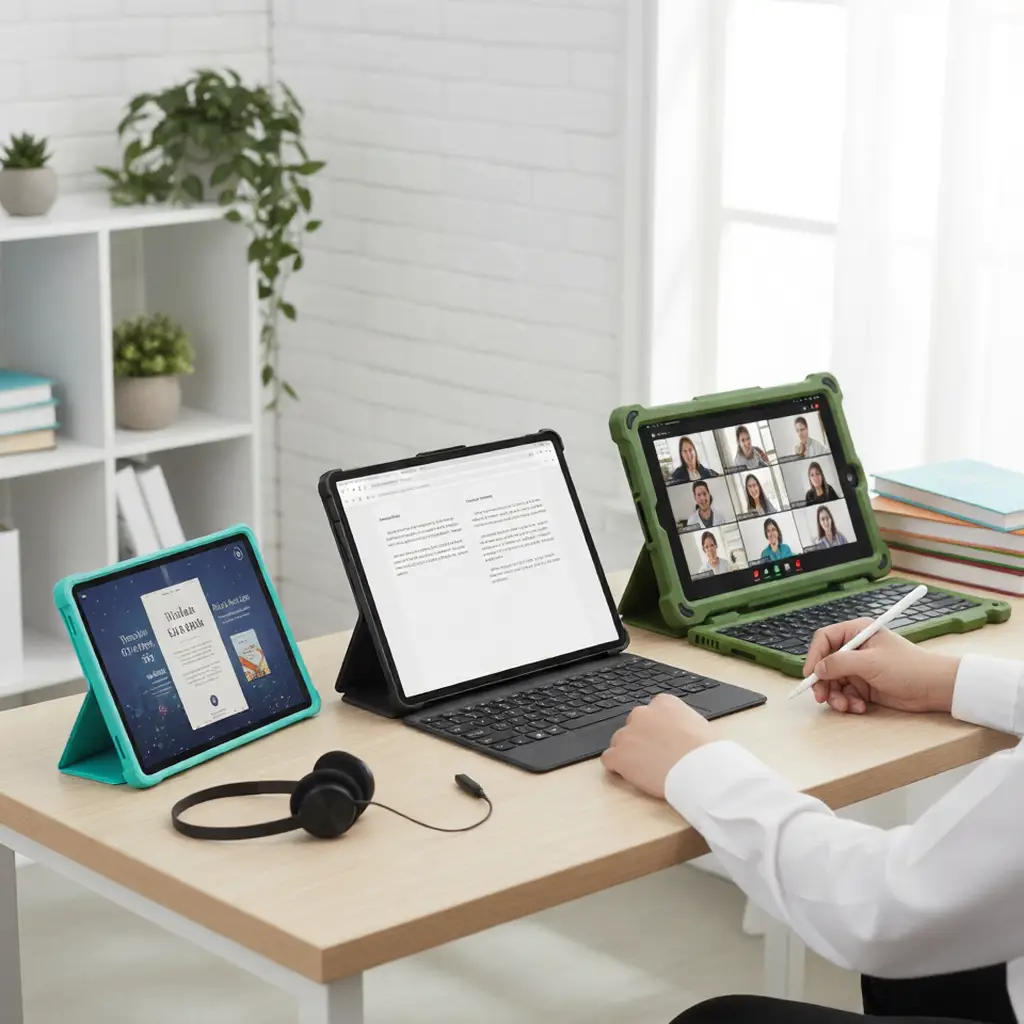
Capacitive styluses with pressure sensitivity annotate diagrams accurately, magnetic storage snapping edges securely. Bluetooth keyboards pair instantly, tent modes propping tablets hands-free for typing. Optional cases bundle both, 10-15ms latency rivaling paper for math notations.
Audio Quality for Lectures and Audiobooks
Quad speakers with Dolby Atmos fill rooms evenly for group views, front-firing grilles directing sound toward users clearly. 3.5mm jacks connect wired headphones distraction-free in libraries, Bluetooth 5.2 codecs like aptX HD preserving audiobook fidelity wirelessly.
Camera Specs for Scanning and Calls
8-13MP rears scan printed notes crisply via apps like Adobe Scan, 5-8MP fronts framing faces well for professor office hours. Macro modes capture whiteboard details 20cm away, document modes auto-straightening crooked shots instantly.
Build Durability and Portability
Aluminum unibodies resist 1m drops better than plastic, IP52 seals repelling splashes during coffee study breaks. Weights under 500g carry effortlessly, slim 7-8mm profiles sliding into sleeves unnoticed.
Software Features for Productivity
Floating windows resize apps freely, dark modes preserving batteries 25% nightly while easing eye strain. Focus modes silence notifications during tests, split-keyboard orientations suiting landscape typing naturally.
Budget Tiers and Long-Term Value
Under 150 units cover essentials solidly, 200-300 unlocks styluses/updates. Per-year costs below 50 via 3-year lifespans, resale retaining 60% value post-graduation.
Accessory Ecosystems and Cases
Folio cases double as stands 120-165° angles, kickstands propping portrait reading stably. Screen protectors preserve oleophobics, folios shielding against backpack crushes fully.
Study App Recommendations
Notability imports PDFs annotatable fluidly, Forest gamifies focus sessions hourly. Quizlet flashcards sync across devices, GoodNotes handwriting converting to text searchable instantly.
Maintenance and Battery Health
Calibrate brightness weekly, optimized charging capping 80% preserving capacity 90% after 500 cycles. Firmware updates biannually add gestures, case compatibility lists avoiding bulk mismatches.
Family Sharing and Multi-User Profiles
Guest modes restrict apps safely for siblings, profile switching preserving study spaces independently. Shared storage partitions homework durably without cross-contaminations.
Future-Proofing Considerations
USB4 readiness previews docks, 5G modems optional for untethered research abroad. Modular RAM rumors 2026 enable upgrades post-purchase economically